Our area sees its share of severe weather — high winds, hail, and heavy thunderstorms. After a big storm, it's worth checking your roof, because the damage that matters most often isn't obvious from the driveway.
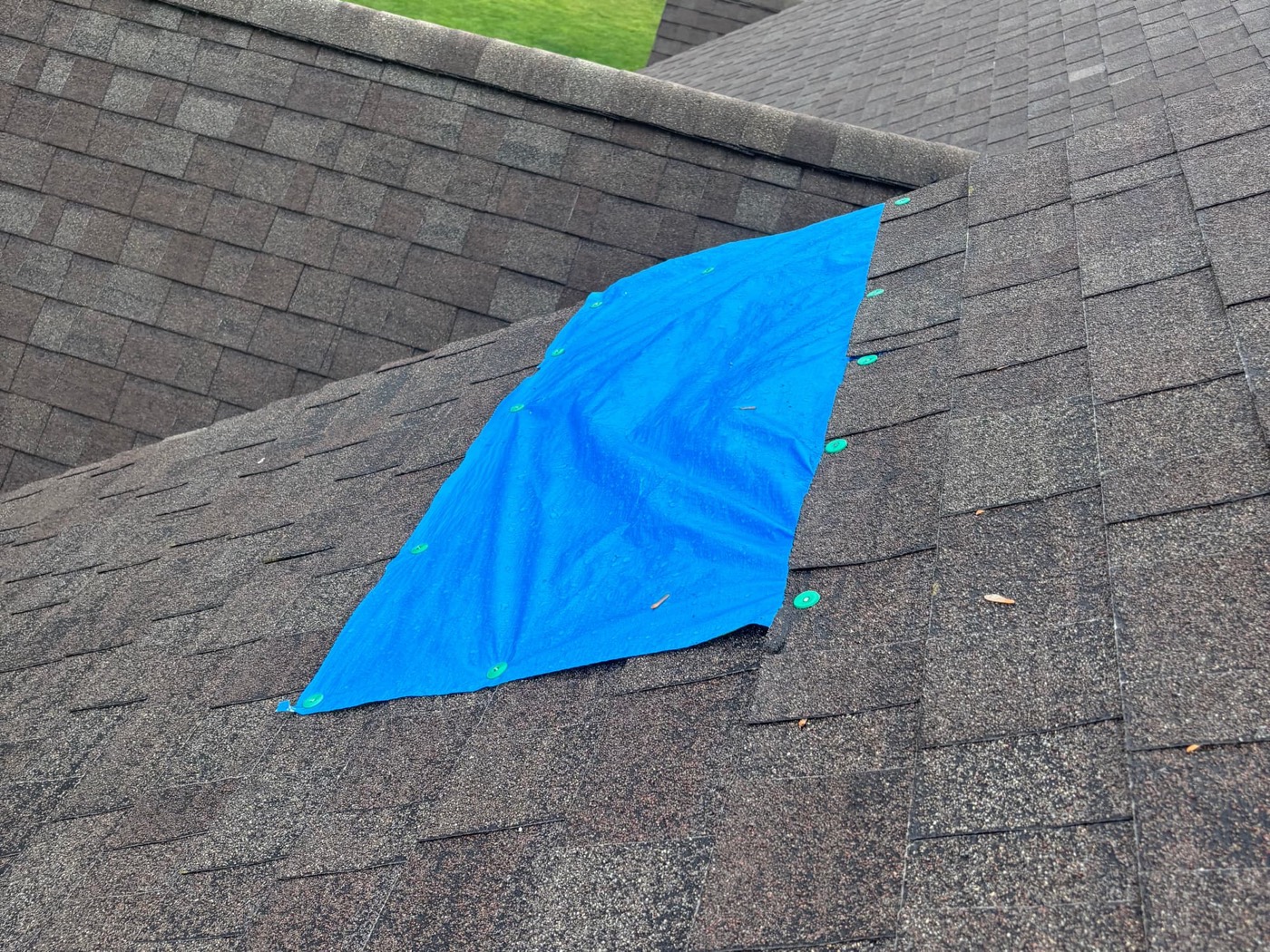
Six signs to look for
- Missing or lifted shingles — wind can peel or loosen shingles, breaking the seal that keeps water out.
- Granules in the gutters — piles of sandy granules mean the protective surface of your shingles is wearing away.
- Dented gutters, vents, or flashing — a sign hail hit hard enough to bruise the roof too.
- Hail bruising — dark, soft spots where granules were knocked loose.
- Water stains or leaks — brown rings on ceilings or walls, sometimes days after the storm.
- Debris or fallen limbs — even without a visible puncture, impact can compromise shingles.
Why acting quickly matters
A compromised roof lets water in, and water damage compounds fast — insulation, drywall, framing, and mold. Catching storm damage early keeps a small problem from becoming a major repair.
What to do next
Document what you can see (photos help), and get a professional inspection before you climb up or start any work. If the damage looks storm-related, you may have an insurance claim — an area where the right contractor makes a big difference. See our roof insurance claim guide for the steps.