Storms get the headlines, but a roof takes damage in plenty of quieter ways too. The good news: most roof problems start small and are far cheaper to fix when you catch them early. Here are the usual culprits — and what to watch for.
The most common causes
- Age and weathering — sun, heat, and years of rain slowly break down shingles.
- Wind — lifts and tears shingles, breaking the seal that keeps water out.
- Hail — bruises shingles and knocks off the protective granules.
- Failed flashing — the metal around chimneys, skylights, and valleys is a common leak point when it corrodes or lifts.
- Poor attic ventilation — traps heat and moisture that age shingles from underneath.
- Ice dams — in winter, melting and refreezing forces water up under the shingles.
- Debris and overhanging trees — branches scrape the surface, and trapped leaves hold moisture.
- Poor installation — even good shingles fail early if they were nailed or flashed wrong.
Early warning signs
- Granules collecting in your gutters or at the base of downspouts
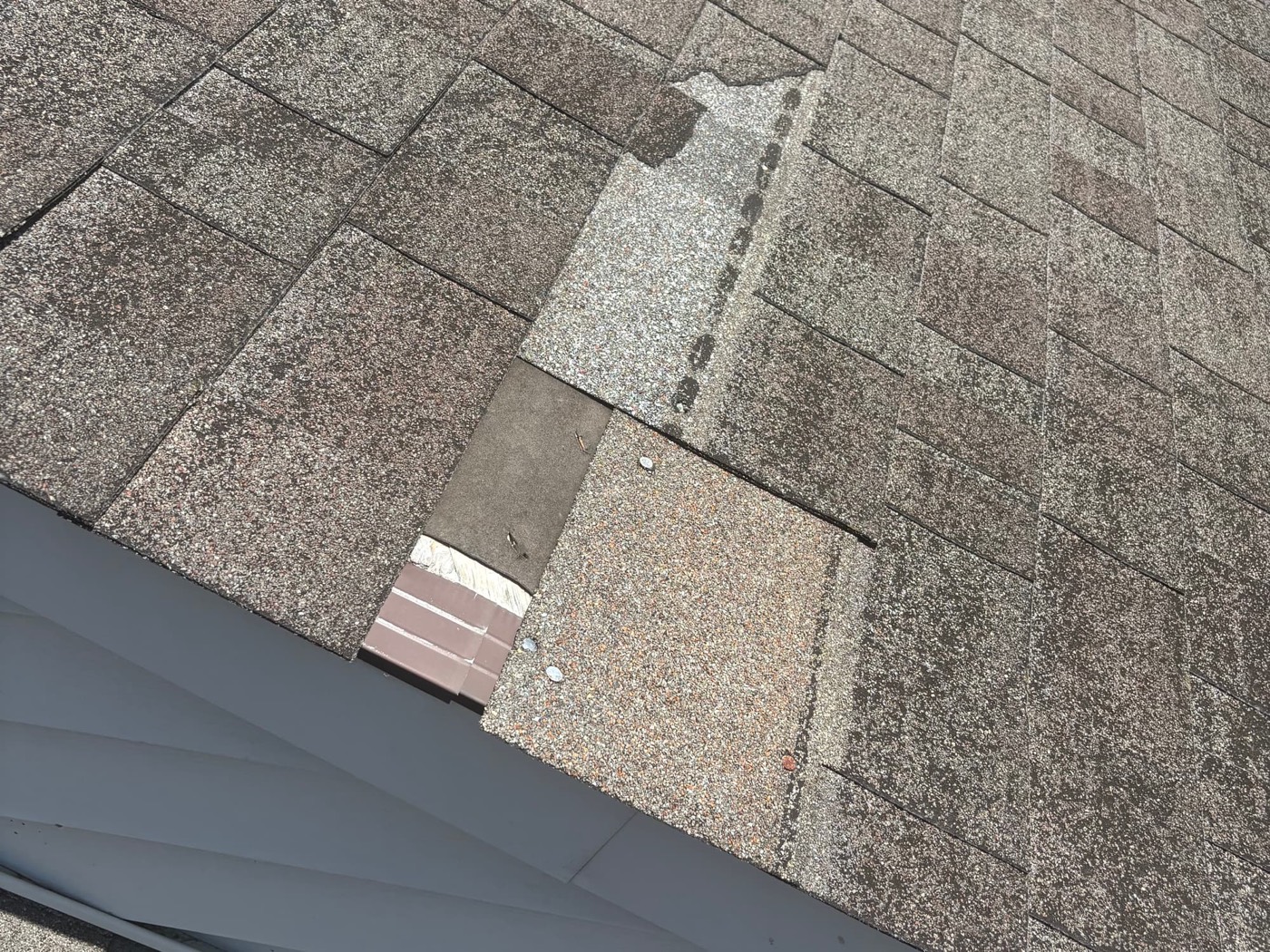
- Shingles that are curling, cracked, or missing
- Dark streaks or worn, bald patches
- Water stains on ceilings or in the attic
- Daylight visible through the roof boards in the attic
Why catching it early matters
A small leak rarely stays small. Water travels — into insulation, drywall, framing, and eventually into mold. A repair that costs a little today can prevent a major bill, and a much bigger mess, later.
What to do
If you’ve spotted any of these signs — or it’s just been a while — have your roof looked at. Our inspections are free and come with an honest recommendation: repair, replace, or nothing needed yet. If the damage turns out to be storm-related, we can also help with the insurance claim.